
In short
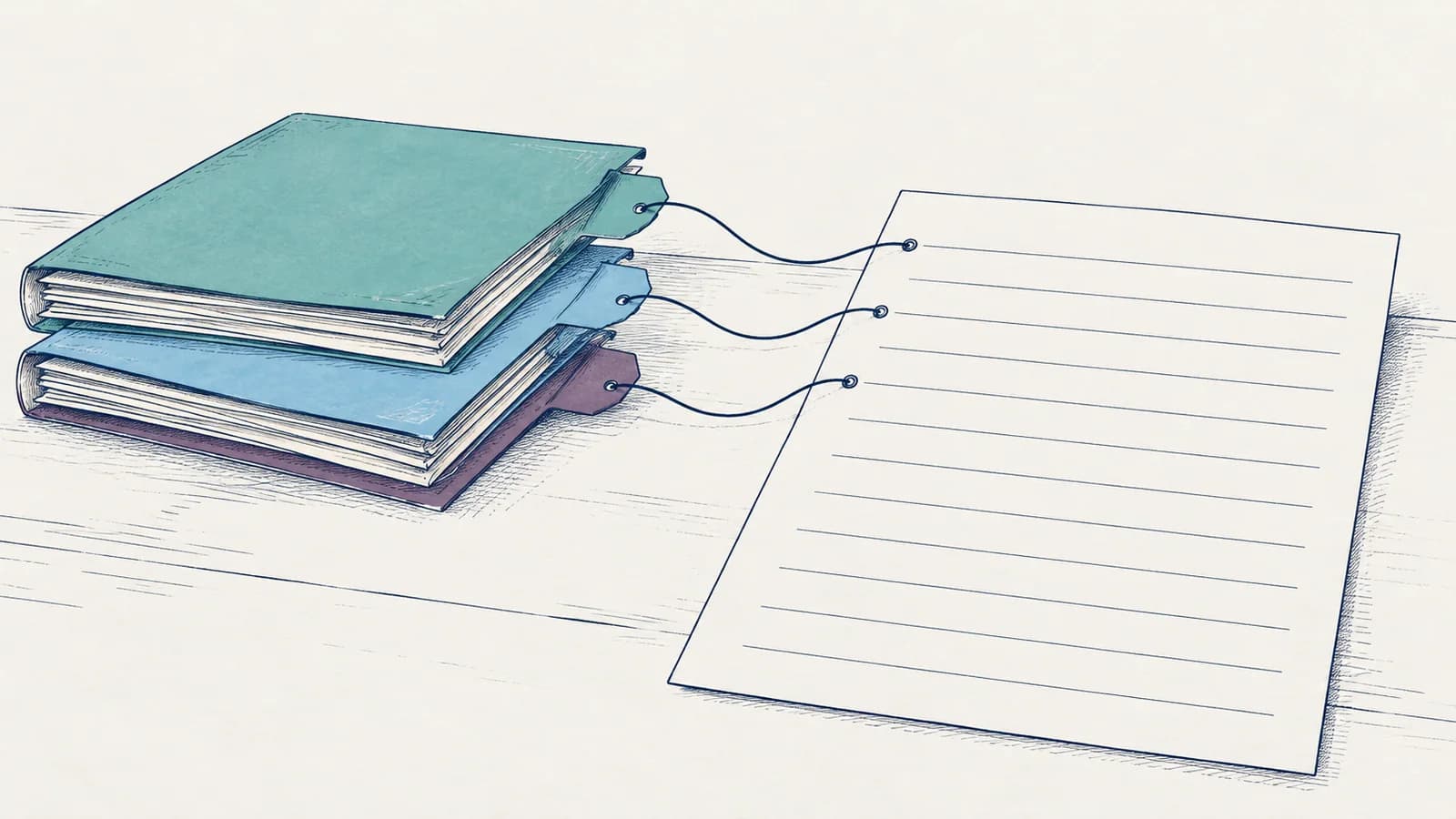
An evidence index is a list, prepared by the petitioner side, that gives every document in a filing a label, a short description and a note of the claim or criterion it supports. It works as a map of the submission so a reader can find a given document and see why it was included. The index is not proof of anything itself; the documents it points to carry the weight.
Also known as: Exhibit list · Table of exhibits
Where it applies
- The index belongs to filings in the EB-1A, O-1A and EB-2 NIW categories, which is Merito's own classification of where the term is used. It is a working tool, not a form. The regulation and policy manual passages used for this entry do not mention it by name, so nothing in them requires one or sets its format.
- What those passages do establish is why a map of the record is useful. For extraordinary ability, 8 CFR 204.5 lists the kinds of initial evidence a petition must carry, including a one-time major award or at least three of ten listed types of evidence. An index can show which exhibits answer which listed item.
Why it matters
Under 8 CFR 103.2(b)(1), evidence submitted with a benefit request is incorporated into and considered part of the request. Everything filed is therefore part of what the officer may read. An index gives that larger body of material a visible structure, so each item can be tied to the fact it is meant to show.
The index also supports consistency. The person signing the request certifies under penalty of perjury that the request and all evidence submitted with it is true and correct. A list that describes each exhibit accurately lets the signer, and any later reader, compare what each document says with what the filing says about it.
How USCIS evaluates it
The documents carry the weight, not the list
The Policy Manual says USCIS weighs a document by its credibility, reliability and authenticity. An index entry that calls an exhibit "major press coverage" does not make it so. An officer reads the exhibit and compares it with the claim. The description should therefore match what the document shows.
Consistency with the claims made
The Policy Manual states that furnished evidence should be scrutinized for consistency with claims in the benefit request and with information in DHS records. If the index describes a role, date or title one way and the underlying exhibit says another, the mismatch is visible on the record.
Whether the exhibit has what the regulation names
For some items the regulation lists contents. Published material about the person, for example, must include the title, date and author of the material and any necessary translation. An index can flag whether each exhibit includes these elements. The officer still decides whether the exhibit satisfies the wording.
Translations, copies and originals
A foreign-language document must come with a full English translation, certified by the translator as complete and accurate and as competent to translate. The Policy Manual says a translator's summary is unacceptable. Under 8 CFR 204.5(g)(1), legible photocopies are generally acceptable for initial filing, though a director may require originals in individual cases. An index can pair each original-language document with its translation.
The standard of proof
The burden of proof stays with the requestor, and the usual standard is preponderance of the evidence: the claim must be probably true on relevant, probative and credible evidence. An index does not change that standard. It only helps an officer see which evidence is offered for which claim.
A practical example
This is an invented illustration. A researcher claims published material about her work and judging of others' work. Her index lists Exhibit 4 as a trade-magazine article, with its title, date and author, and Exhibit 4A as the certified English translation of the foreign-language original. Exhibit 7 is described as the reviewer invitation and Exhibit 8 as the journal's confirmation that she completed the review. Each line names the claim it supports. A reader can open any exhibit, check it against the description and see which statement in the cover letter relies on it.
A common misconception
One mistaken reading is that an evidence index is itself evidence or a required form that shows a criterion is met. The sources instead place the burden on the requestor to submit relevant, credible documents, and an officer weighs those documents; a list that describes them proves nothing on its own.
Common problems
Descriptions that overstate the exhibit
An index line that calls a document "national recognition" or "landmark contribution" states a conclusion the exhibit may not support. Because officers compare furnished evidence with the claims made, a gap between the label and the document is visible. A neutral description of what the document is and says leaves the conclusion to the argument.
Numbering that drifts from the filing
If exhibits are renumbered, added or removed after the index is drafted, the cover letter, the index and the binder can point to different documents. A reader following a reference then lands on the wrong item or on nothing. The risk grows when a filing is assembled in stages.
Translations separated from originals
A foreign-language document without a full certified translation does not meet the Policy Manual requirement, and a summary is not acceptable. An index that lists a document without noting its translation leaves a reader unable to tell whether the translation was supplied.
How to document it
A numbered exhibit list with neutral descriptions
Give each document a unique label and a plain description of what it is, its date and its source, so a reader can find it and check the description against the page.
A column naming the claim or listed item each exhibit supports
Tying each exhibit to a listed type of evidence in 8 CFR 204.5, or to a statement in the cover letter, shows why it was included.
Notes on regulation-named contents
Where the regulation names contents, such as title, date and author for published material, record that the exhibit shows them and that any needed translation is attached.
Certified translations paired with originals
List each foreign-language document with its full English translation and the translator's certification, as the Policy Manual describes.
Notes on original versus copy
Record which items are photocopies and which are originals, since the regulation says originals may be required in individual cases and USCIS may ask for them.
Official sources
- 8 CFR 103.2 (submission and adjudication of benefit requests) — accessed October 22, 2026
- 8 CFR 204.5 (petitions for employment-based immigrants) — accessed October 22, 2026
- USCIS Policy Manual, Volume 1, Part E, Chapter 6 (Evidence) — accessed October 22, 2026
Use it in Merito
Organize your exhibits in the Evidence BinderLast reviewed October 22, 2026