
In short
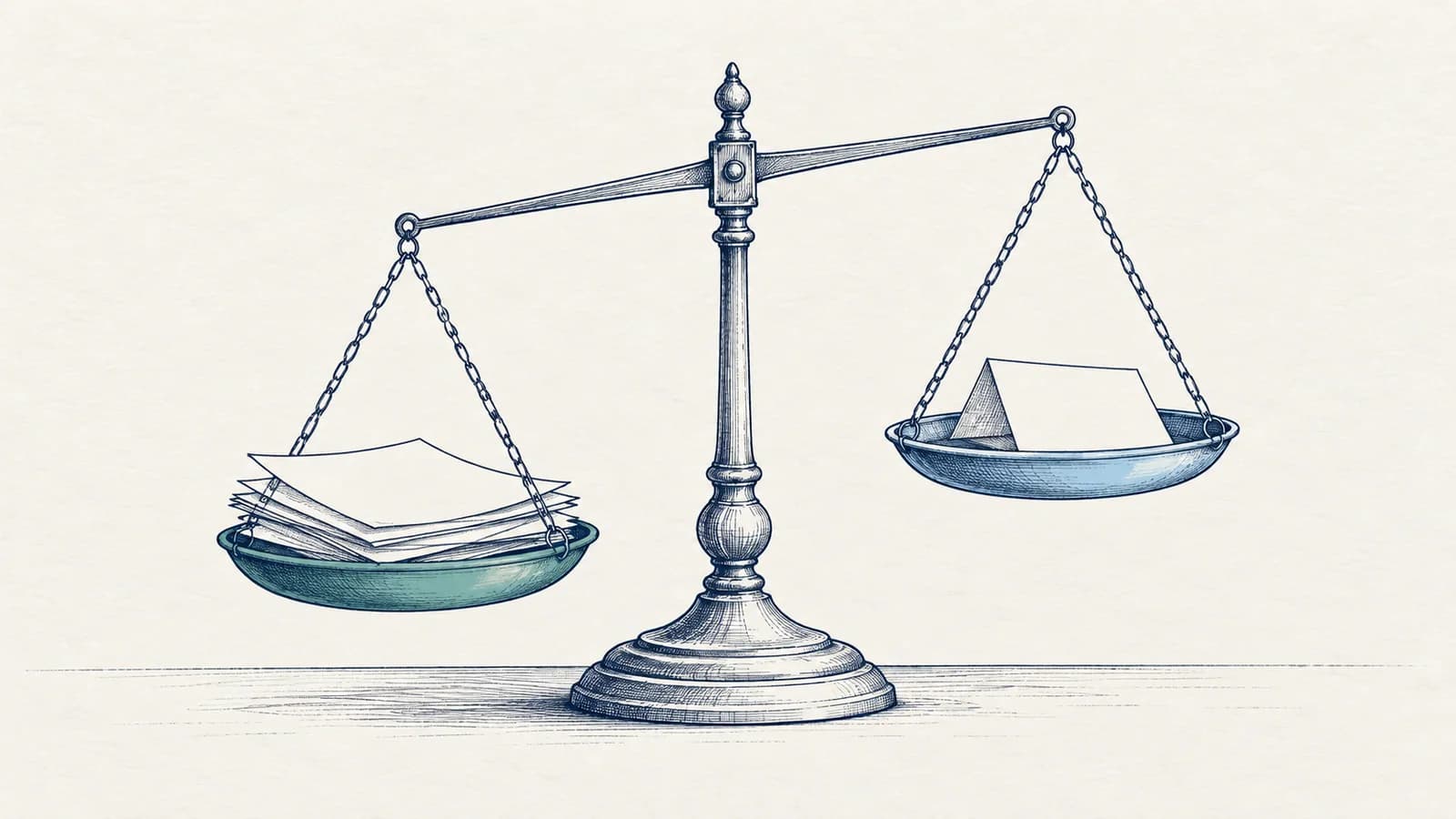
Preponderance of the evidence is the standard of proof applied in most administrative immigration proceedings. A claim meets it when relevant, probative and credible evidence leads an officer to believe the claim is "probably true" or "more likely than not." It asks how convincing the record must be, not whether every doubt has been removed.
Also known as: More likely than not standard · Probably true standard
Where it applies
- The USCIS Policy Manual states that the preponderance of the evidence standard is the one applied in most administrative immigration proceedings. In Merito's editorial classification the term belongs to the EB-1A, O-1A and EB-2 NIW categories. The Manual also says the standard does not govern where the law specifies a different one, and it gives the clear and convincing evidence standard as an example of a higher standard that the Immigration and Nationality Act sets in some cases.
- Matter of Dhanasar, the Administrative Appeals Office (AAO) precedent decision on the national interest waiver, names the standard directly. It says USCIS may grant a waiver if the petitioner demonstrates three elements by a preponderance of the evidence: substantial merit and national importance, being well positioned to advance the endeavor, and a net benefit to the United States in waiving the job offer and labor certification. The decision's footnote explains that the petitioner must show he or she more likely than not satisfies the qualifying elements.
Why it matters
The standard sets how much the record has to show. The Manual separates the burden of proof, which always rests on the person requesting the benefit and never shifts to USCIS, from the standard of proof, which is the amount of evidence needed to establish eligibility. Knowing the difference helps a reader see that the task is to bring forward evidence, and that the measure applied to it is "more likely than not."
The Manual also describes what follows when the standard is not met: it is appropriate for the officer to request additional evidence, issue a notice of intent to deny, or deny the case. A denial must explain the specific reasons in writing under 8 CFR 103.3, so the stated reasons can be read against the standard. That regulation also says an appeal is summarily dismissed when the party does not identify a specific erroneous conclusion of law or statement of fact.
How USCIS evaluates it
The meaning of "more likely than not"
The Policy Manual cites INS v. Cardoza-Fonseca for defining "more likely than not" as a greater than 50 percent probability of something occurring. That is a description of the legal measure applied to a claim, and it says nothing about how any particular petition will be decided. The Manual adds that even if some doubt remains, evidence that leads the officer to believe the claim is probably true satisfies the standard.
Quality as well as quantity
Dhanasar states that adjudicators consider not only the quantity but also the quality of the evidence, including its relevance, probative value and credibility. The Manual uses the same three words when it describes evidence that can meet the standard. A large pile of documents is therefore not the measure. What matters is whether the documents bear on the element, actually show something about it, and can be believed.
Applied element by element
Dhanasar applies the standard to each element of its framework. For the petitioner's proposed teaching activities, the decision found that the record did not indicate by a preponderance of the evidence that the work would affect STEM education more broadly, so the national importance element was not established for that part of the proposal. It then did not address the remaining elements for those activities. The same decision found the research in aerospace engineering met all three elements.
What the standard does not demand
Dhanasar says petitioners are not required to show that their endeavors are more likely than not to ultimately succeed, because forecasting success is uncertain. They must still establish by a preponderance of the evidence that they are well positioned to advance the endeavor. The standard attaches to the element the framework names, not to a prediction of outcomes.
A different question from counting criteria
Kazarian v. USCIS describes the EB-1A regulation as requiring evidence of at least three listed types, and the court affirmed a result where only two types were presented. That is a question of whether the regulatory requirement is met, and it is separate from how convincing the evidence is. The court also said the AAO may not impose a novel evidentiary requirement that the regulation does not contain.
A practical example
This is an invented illustration. A researcher asks for a national interest waiver and describes an endeavor in materials science. The record includes a research plan, funding documents and letters from scientists who describe how the work could be used in the field. Each document is relevant to the endeavor, and the letters name specific work and sources. Read against the standard, the question is whether this material makes it more likely than not that each element is satisfied. A record that only states the endeavor is important, without documents showing why, leaves the officer little to weigh on that point.
A common misconception
One mistaken reading is that the standard requires proof without any doubt. The Policy Manual says the opposite: even if there is some doubt, relevant, probative and credible evidence that makes the claim probably true or more likely than not satisfies the standard. Higher standards, such as clear and convincing evidence, apply only where the law specifies them.
Common problems
Treating the standard as the same thing as the burden
The burden of proof is who must bring forward the evidence, and the Manual says it always falls on the benefit requestor. The standard is how much evidence is enough. A record built as though USCIS must disprove eligibility misreads the burden, since the Manual states it never shifts to USCIS.
Evidence that is relevant but not probative
A document can touch the topic and still show little. Dhanasar found letters attesting to teaching ability and mentorship participation did not establish that the activities would affect the field more broadly. A reader can see the gap between what the documents show and what the element asks.
Claims with no source
A statement of importance or achievement that names nothing an officer can check gives little to weigh on the question of credibility. The standard looks to the quality of the evidence, and an assertion without a document or identified source adds little to it.
Confusing the standard with the criteria count
Meeting a numerical requirement, as in the EB-1A regulation discussed in Kazarian, is a different inquiry from the standard of proof. Treating them as one can leave a record that is strong on one question and silent on the other.
How to document it
Primary documents for each element
Contracts, publications, funding records or awards show a fact directly, which supports the probative value of the record on that element.
Letters that name specific work and sources
A letter that identifies what was done, when, and how the writer knows of it gives an officer something to check and bears on credibility.
An evidence index tied to each element
A table linking every exhibit to the element it supports lets a reader see which proposition each document is offered for.
Evidence of the proposed endeavor's reach
For national interest waiver claims, documents that show how the work could affect the broader field speak to national importance, the point where the Dhanasar teaching evidence was found lacking.
Evidence of position to advance the endeavor
Records of training, past results, plans and support show the person is well positioned, the element Dhanasar requires to be shown by a preponderance of the evidence.
Translations and dates on foreign or older documents
Clear dates and translations let a reader understand what each document is and when it was created.
Official sources
- USCIS Policy Manual, Volume 1, Part E, Chapter 4 (Burden and Standards of Proof) — accessed October 22, 2026
- Matter of Dhanasar, 26 I&N Dec. 884 (AAO 2016) — accessed October 22, 2026
- Kazarian v. USCIS, 596 F.3d 1115 (9th Cir. 2010) — accessed October 22, 2026
- 8 CFR 103.3 (denials, appeals and certifications) — accessed October 22, 2026
Use it in Merito
Build your evidence checklistLast reviewed October 22, 2026