
In short
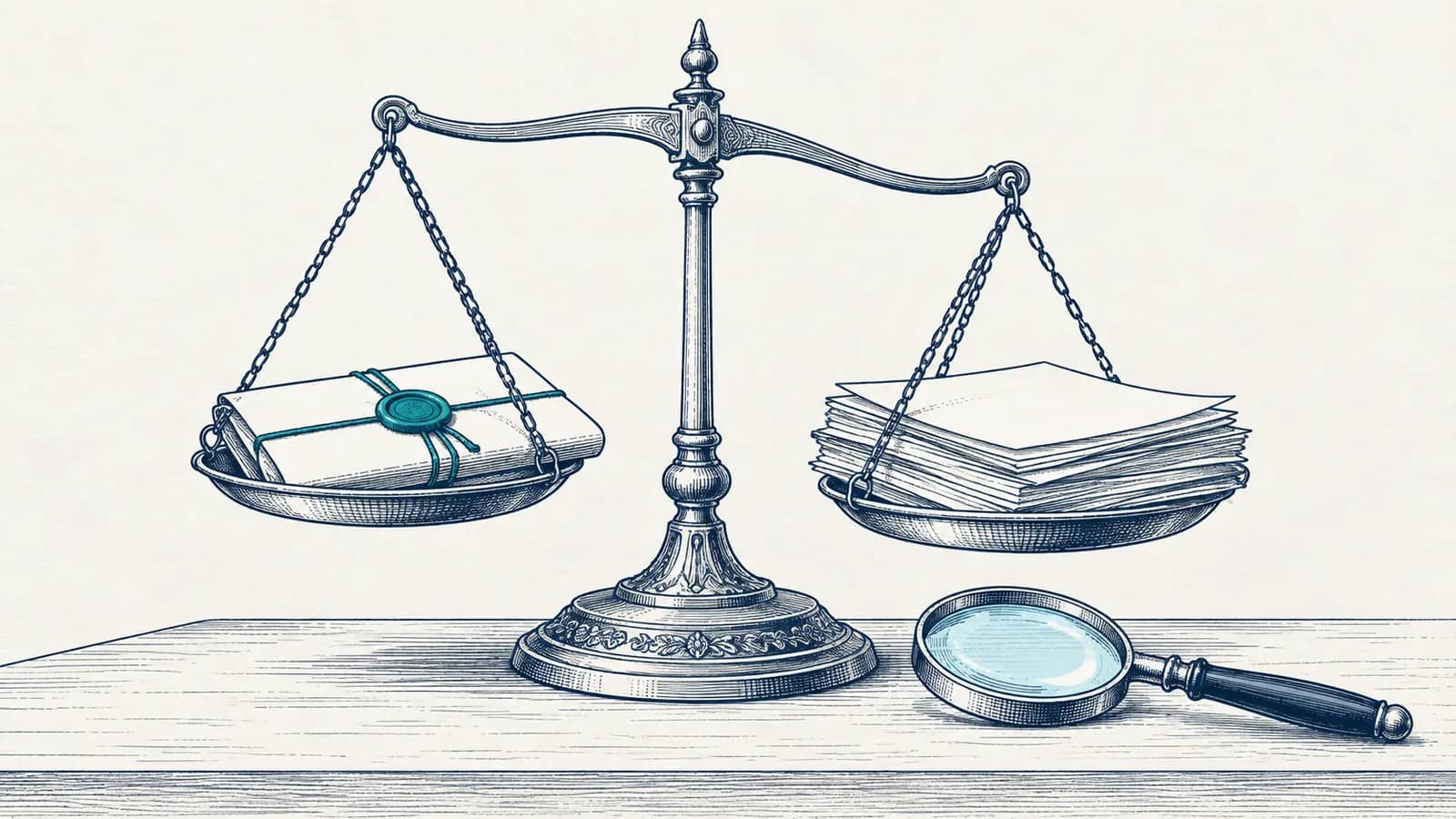
Probative value is how strongly a piece of evidence helps show that a fact the petition depends on is true. A document with high probative value speaks directly to the fact at issue and gives an officer something concrete to rely on. A document with low probative value may be accurate yet add little to what has to be proved.
Also known as: Evidentiary weight · Probative force
Where it applies
- Merito treats the term as part of the EB-1A, O-1A and EB-2 NIW categories. In each, the person filing carries the burden of proof, and the Policy Manual says that burden always falls solely on the benefit requestor and never shifts to USCIS. Evidence is the means of carrying it, so the quality of each document matters alongside the fact that it was submitted.
- The Policy Manual ties the term to the standard of proof. It says that when a requestor submits relevant, probative, and credible evidence leading an officer to believe a claim is probably true, the standard is met. Matter of Dhanasar, a national interest waiver decision, repeats the idea in a footnote: the AAO considers the quantity and also the quality of evidence, including relevance, probative value, and credibility.
Why it matters
The Policy Manual states the preponderance of the evidence standard, which asks whether a claim is more likely than not true. The route to that conclusion runs through evidence that is relevant, probative and credible. Evidence lacking those qualities gives an officer little reason to find a claim probably true, even if some doubt would be tolerated.
The Policy Manual also says that when a requestor has not met the standard, an officer may request additional evidence, issue a notice of intent to deny, or deny the case. Under 8 CFR 103.3, a denial must explain the specific reasons in writing, and an appeal must identify a specific erroneous conclusion of law or statement of fact. A reader who understands probative value can see how a record supports the facts that those reasons and objections address.
How USCIS evaluates it
Relevance to the fact at issue
A document is offered to show something, and the regulation sometimes describes what that something looks like. In Kazarian, the regulation lists particular kinds of evidence, such as published material about the person that must include its title, date and author. Matching each document to the fact it is offered for lets a reader see what the record shows on that point.
Specificity and support
The court in Kazarian described a colleague's statement that a self-published textbook was certain to be required reading in many schools, while noting that the petitioner presented no evidence the book was actually used in any class. That passage shows a gap between a claim and anything backing it. A statement that names its basis leaves an officer something to check.
Credibility alongside probative value
The Policy Manual lists three qualities together: relevant, probative and credible. The words are separate. A document can be believable yet say little about the fact at issue, or bear directly on the fact while its source is open to question. Evidence that has all three qualities is what the Policy Manual describes as leading to a belief that a claim is probably true.
Quality as well as quantity
Dhanasar's footnote says the AAO considers both. In the decision itself, the AAO described the petitioner's expert letters as probative because they came from senior people in academia, government and industry and described the importance of the research to U.S. strategic interests. Media articles on congressional interest supported the same point.
Evidence at the threshold and at the merits
Kazarian separates counting whether a petitioner provided the required types of evidence from the later merits question. The court said an agency may not unilaterally add evidentiary requirements beyond the regulation, though matters such as citations by other authors might bear on the final merits determination. Weight can therefore be assessed at more than one point.
A practical example
This is an invented illustration. A researcher claims that a software tool changed practice in the field. One letter says the tool is widely admired. Another, from an unaffiliated lab director, states that her lab adopted the tool in a named year, replaced an older method with it, and shortened a specific procedure. Both letters support the claim, but the second gives an officer particulars to compare against other documents in the record, so it speaks more directly to the fact at issue.
A common misconception
One mistaken reading is that submitting a document is enough for it to count. The Policy Manual says the standard is met by relevant, probative, and credible evidence, and Dhanasar says the AAO weighs quality, including probative value, as well as quantity.
Common problems
Praise without a stated basis
A letter that calls work important but names no source for the claim leaves an officer nothing to check. The Kazarian passage on the textbook shows the gap: a prediction of wide use was offered, with no evidence that the book was used in any class.
Evidence aimed at the wrong fact
A document may be genuine and still not address the point it sits under. Kazarian describes regulatory evidence types with defined content, such as published material that includes title, date and author. A document missing what the criterion describes is harder to tie to that criterion.
Claims that cannot be traced
A statement about influence or adoption with no document behind it leaves the record resting on the writer's say-so alone. The Policy Manual speaks of evidence that leads an officer to believe the claim is probably true, which depends on what the record actually shows.
How to document it
A list of facts the petition must prove
Writing each fact separately lets you match every exhibit to the fact it supports and see where a fact has no direct support.
Primary records behind each claim
Contracts, publications, award rules and adoption records show the fact itself, so a letter does not stand alone.
Letters that state how the writer knows the facts
A letter naming specific work, dates and the writer's basis gives an officer details to compare with other documents.
Independent sources
Material from people or outlets outside the person's own circle shows that the fact is noticed beyond the person's own account.
Official sources
- USCIS Policy Manual, Volume 1, Part E, Chapter 4 (Burden and Standards of Proof) — accessed October 23, 2026
- Matter of Dhanasar, 26 I&N Dec. 884 (AAO 2016) — accessed October 23, 2026
- Kazarian v. USCIS, 596 F.3d 1115 (9th Cir. 2010) — accessed October 23, 2026
- 8 CFR 103.3 (denials, appeals and certifications) — accessed October 23, 2026
Use it in Merito
Organize your exhibits in the Evidence BinderLast reviewed October 23, 2026