
In short
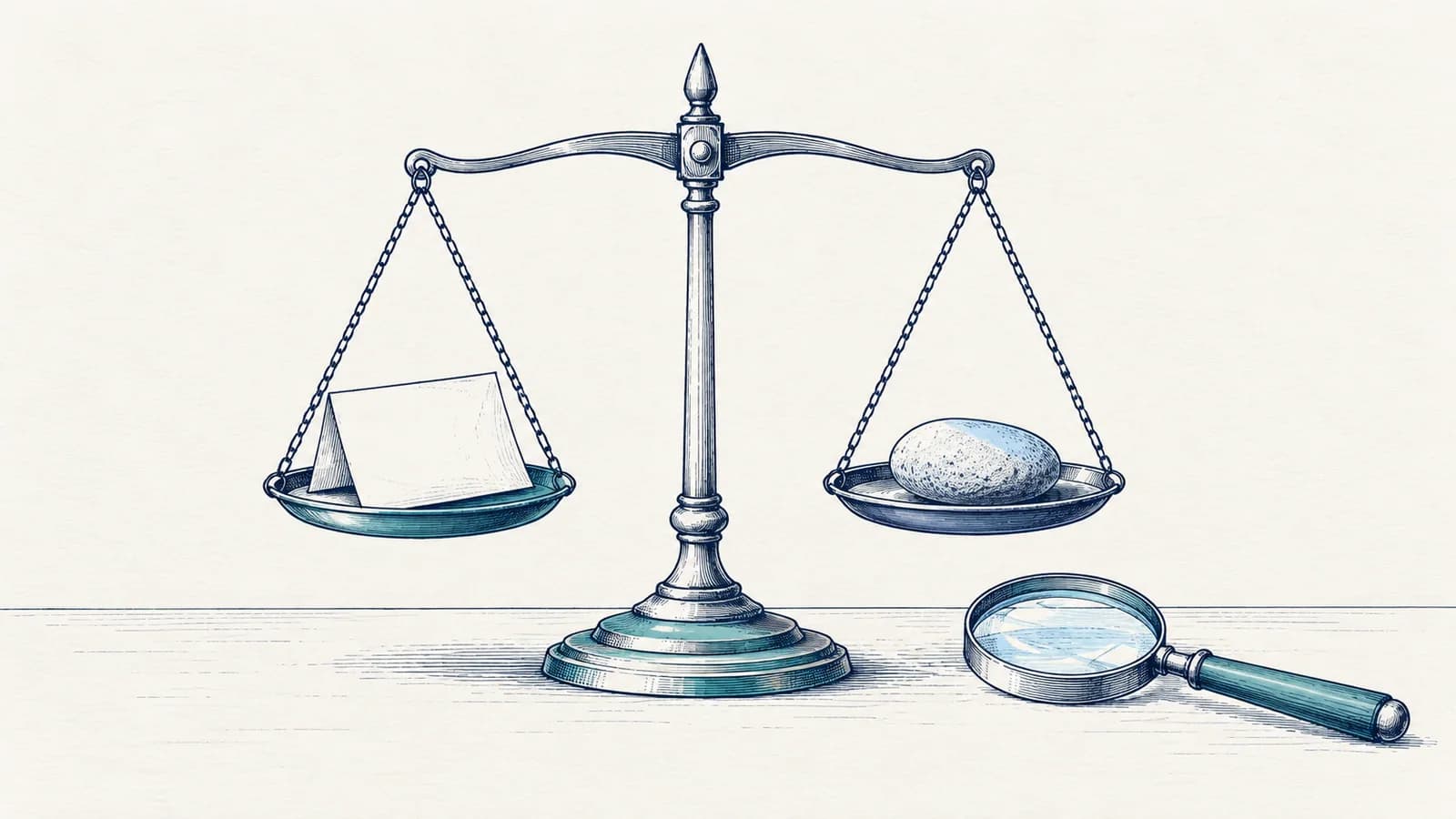
Materiality is a plain-language label for whether a fact or document bears on a question the governing rule actually asks. A material item helps show, or undercut, an element of eligibility; an item that is merely true or impressive may not. The sources used here do not define the word. They speak of relevant, probative and credible evidence tied to the elements a regulation or precedent sets out.
Also known as: Material fact · Material evidence · Relevance to an element
Where it applies
- Merito's editorial classification places the term in EB-1A, O-1A and EB-2 NIW matters. The sources do not define "materiality" as a test; they show the idea through elements. The extraordinary ability regulation lists types of evidence, and the Ninth Circuit's Kazarian decision describes a requirement of three. Matter of Dhanasar sets out three prongs for a national interest waiver. In each, evidence is read against named elements.
- The idea also sits behind the rules on denials and appeals. Under 8 CFR 103.3, an officer who denies a filing must explain the specific reasons in writing. An appeal must be summarily dismissed when the party fails to identify specifically any erroneous conclusion of law or statement of fact. Both rules call for a stated link between a particular point and a particular conclusion.
Why it matters
The Policy Manual states that the burden of proof always rests on the benefit requestor and never shifts to USCIS. The standard is a preponderance of the evidence, met when relevant, probative and credible evidence leads an officer to find a claim "probably true." If it is not met, the officer may request more evidence, issue a notice of intent to deny, or deny. A document unconnected to an element does little to carry that burden.
Dhanasar shows the effect. The petitioner's STEM teaching had substantial merit, yet the record did not show by a preponderance that it would affect STEM education more broadly, so national importance was not met for that activity. A true, favorable fact did not stand in for the element. In Kazarian, the court counted two types of evidence against a requirement of three.
How USCIS evaluates it
Start from the wording of the rule
Kazarian states that the AAO may not unilaterally impose a novel evidentiary requirement. The court found nothing in the scholarly articles provision requiring proof of the research community's reaction, and nothing in the judging provision turning on which university the judge belonged to. Such points might matter to a final merits determination. A fact is first measured against what the regulation says.
Relevance, probative value and credibility
Dhanasar says both the quantity and the quality of evidence are considered, including relevance, probative value and credibility; the Policy Manual uses the same three words. Relevance asks whether an item bears on the element, probative value asks how much it tends to prove, and credibility asks whether it can be believed. A larger pile does not repair a weak item.
Matching evidence to the right prong
Dhanasar's first prong focuses on the proposed endeavor, its substantial merit and national importance. The second shifts to the person, listing education, skills, record of success, a plan, progress and interest from potential users or investors. Economic impact may be favorable but is not required. Evidence is read against the prong it is offered for.
A practical example
This is an invented illustration. A researcher files a national interest waiver petition with a list of conferences attended, a prize from a student competition, a three-year research plan, and a letter from a federal laboratory describing interest in the work. The list and the prize say little about the endeavor's importance or the person's position to advance it. The plan and the letter map onto factors Dhanasar lists for the second prong. A cover note tying each exhibit to its prong lets the record be read element by element.
A common misconception
One mistaken reading is that a document counts toward an element simply because it is true, favorable or written by a respected person. The sources tie evidence to what the regulation or precedent asks; in Dhanasar, real merit in teaching did not meet the national importance element without broader impact.
Common problems
Praise with no stated basis
In Kazarian, a colleague wrote that the petitioner's self-published textbook was certain to be required reading widely, yet no evidence showed any class used it. A prediction without supporting facts leaves nothing to check, which limits its probative value.
Evidence aimed at the wrong element
A document can be accurate and still answer a different question from the one the element poses. The teaching in Dhanasar had substantial merit, but the record did not speak to broader impact. Merit evidence cannot fill an importance gap.
Adding items within one type
Kazarian counted types of evidence, not documents. The petitioner offered six articles and an e-print under one provision, and the shortfall was in the number of types. More documents of a type already shown do not add a new type.
How to document it
An element-to-exhibit table
List each regulatory criterion or Dhanasar prong beside the exhibits addressing it, so the link is stated and not left implicit.
Source records behind claims in letters
A letter saying a work is widely used is supported by records of use, as the missing class-use evidence in Kazarian shows.
Evidence of the endeavor's reach
Documents showing implications beyond one setting speak to national importance, which Dhanasar evaluates by prospective impact and not by geography alone.
Records of the person's position to advance the work
Education, record of success, a plan, progress and interest from users or funders match the second-prong factors Dhanasar lists.
Official sources
- USCIS Policy Manual, Volume 1, Part E, Chapter 4 (Burden and Standards of Proof) — accessed October 23, 2026
- Kazarian v. USCIS, 596 F.3d 1115 (9th Cir. 2010) — accessed October 23, 2026
- Matter of Dhanasar, 26 I&N Dec. 884 (AAO 2016) — accessed October 23, 2026
- 8 CFR 103.3 (denials, appeals and certifications) — accessed October 23, 2026
Use it in Merito
Build your evidence checklistLast reviewed October 23, 2026